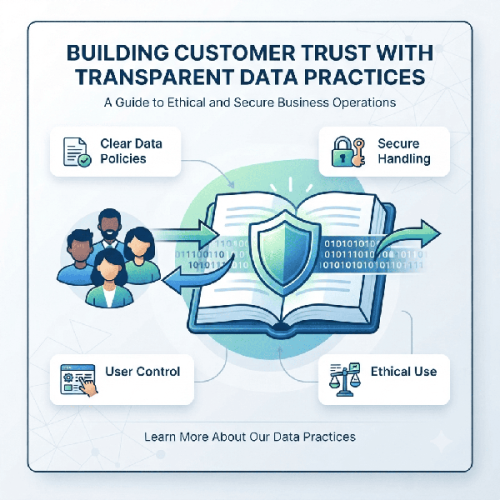
Building customer trust through transparent data practices in 2026 requires moving beyond simple "checkbox" compliance toward a proactive, user-centric strategy. As regulatory scrutiny over AI and personal data intensifies, transparency has become a competitive differentiator.
1. Simplify Communication (The "Plain Language" Mandate)
Legalese is a barrier to trust. Customers are more likely to trust you when they understand exactly what they are agreeing to.
-
Tiered Disclosures: Use a "summary first" approach. Provide a one-page, jargon-free overview of your data practices, with links to deeper legal documentation for those who need it.
-
Visual Aids: Utilize infographics or short explainer videos to clarify how data flows through your services.
-
Just-in-Time Notices: Don’t bury disclosures in a massive Terms and Conditions document. Provide brief, context-aware notifications at the exact moment you ask for a piece of data (e.g., when a user shares their location or email).
2. Empower User Control
Trust is built when customers feel they are in the "driver’s seat" regarding their own information.
-
Dynamic Consent Management: Move beyond a static "Accept" button. Implement preference centers that allow users to toggle specific types of data collection or communication channels on and off.
-
One-Click Opt-Out: In many jurisdictions, the expectation is now a seamless, one-click process to opt out of tracking or data sharing. Ensure this is technically functional, not just a design element.
-
Data Portability & Deletion: Provide clear, accessible tools for users to download their data or request its deletion. This demonstrates that you view data as their property, not yours.
3. Radical Transparency in AI and Automation
By 2026, regulators and customers alike demand explainability regarding algorithmic decisions.
-
AI Disclosure: If you use AI for personalization, pricing, or risk assessment, be explicit about it. Customers should know when they are interacting with an AI agent.
-
Human-in-the-Loop: For high-stakes decisions (e.g., loan approvals, performance reviews), provide a path for the user to request a human review of an automated outcome.
-
Fairness Documentation: Maintain clear, audit-ready records of how your models make decisions to protect against bias and profiling.
4. Implement "Privacy by Design"
Building trust is easier when your infrastructure inherently protects the user.
-
Data Minimization: Adopt a "collect only what you need" policy. If you don't collect it, you don't have to protect it, and you minimize your liability.
-
Zero Trust Architecture: Assume no internal or external network is secure. Use identity-centric access controls and micro-segmentation so that even if one part of your system is compromised, the broader pool of customer data remains isolated and safe.
-
Automated Deletion: Rely on automated lifecycle management to scrub data after its retention period expires, rather than relying on manual processes.
5. Accountability as a Trust Signal
-
Third-Party Disclosure: If you share data with vendors, be transparent about who they are and why they need it. Require your vendors to meet the same high standards you set for yourself.
-
Proactive Updates: If your data practices change (especially regarding AI or new tracking tools), notify your customers before the change takes effect. A "last updated" date on your policy is the bare minimum; proactive communication is the gold standard.
Security Certifications: Display recognized certifications (e.g., ISO/IEC 27701, SOC 2) prominently. These act as "trust signals" that you have undergone rigorous external audits.

krishna
Krishna is an experienced B2B blogger specializing in creating insightful and engaging content for businesses. With a keen understanding of industry trends and a talent for translating complex concepts into relatable narratives, Krishna helps companies build their brand, connect with their audience, and drive growth through compelling storytelling and strategic communication.